
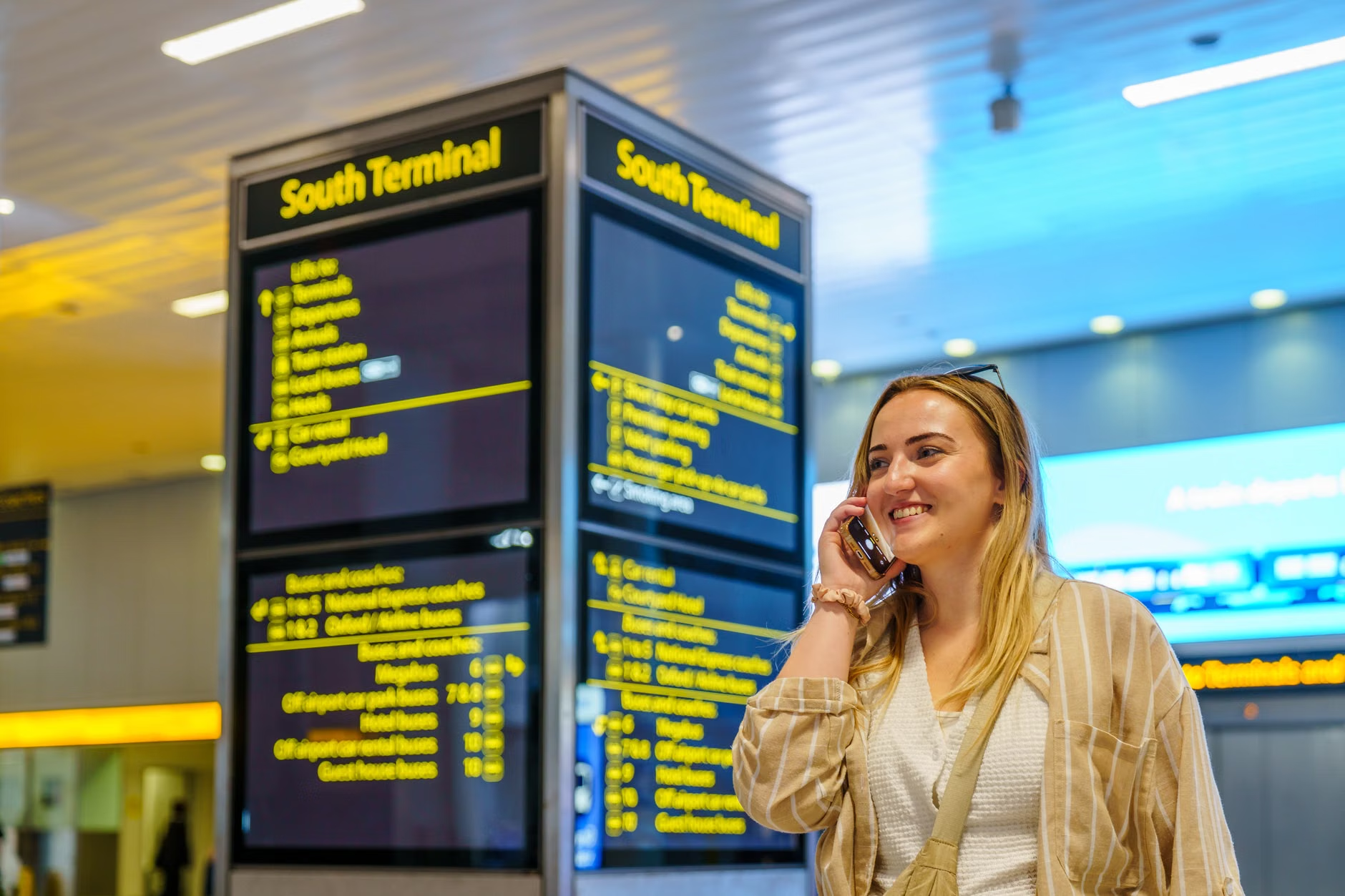
Solo travel is usually safest when it is a little boring. You know how you are getting from the airport to the hotel. You know where you will go if plans change. Your phone works, your room feels secure, and at least one person can reach you if something goes sideways. That may not sound adventurous, but it is what keeps small problems from turning into stranded-at-midnight problems.
Table of Contents
- Good solo travel safety is mostly about reducing uncertainty
- Start with a destination reality check
- Use the Route-Refuge-Reachability check
- Close the predictable gaps before you leave
- Pick lodging and transportation for recoverability, not just price
- Manage visibility, alcohol, and routine like someone who expects friction
- Health and digital problems can become physical safety problems
- If a situation feels off, act earlier than feels socially comfortable
- Common solo travel mistakes that look harmless
- Advice changes with the traveler and the destination
- The safest solo trip is the one with easy exits
- References
TL;DR
- Research the destination at street level, not just country level: review the current U.S. Travel Advisory, local laws and customs, transportation guidance, and CDC health information before you go. (travel.state.gov)
- For international trips, U.S. travelers should enroll in STEP and share itinerary details, emergency contacts, and document copies with someone they trust. (travel.state.gov)
- Pre-book the parts of the trip that are hardest to improvise safely, especially the first night’s lodging and airport transfer. The State Department notes that travelers are often most exposed on arrival, and transportation safety varies widely by destination. (travel.state.gov)
- Treat transportation, fatigue, alcohol, illness, and dead batteries as major solo-travel risks. CDC notes that motor vehicle crashes are the leading cause of death among healthy travelers. (wwwnc.cdc.gov)
- If something feels wrong, change the plan early: move to a staffed public place, switch vehicles or routes, contact local authorities, and use the embassy or consulate if you need help abroad. (travel.state.gov)
Good solo travel safety is mostly about reducing uncertainty
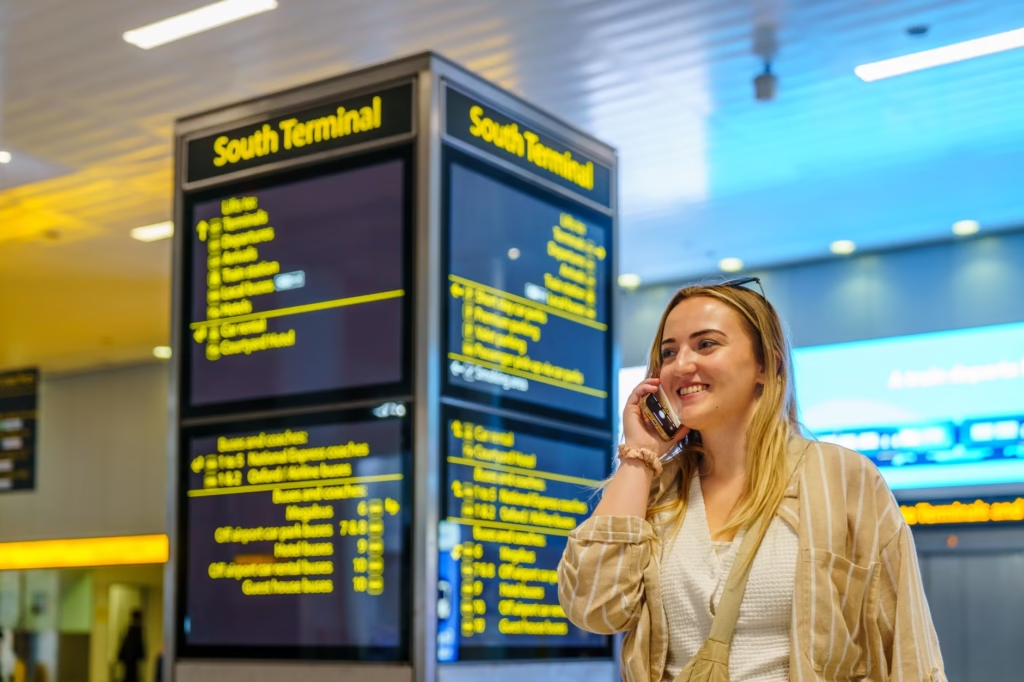
Most bad solo-travel situations do not start dramatically. They start with uncertainty: a late arrival, confusing transport, a dead battery, a room that feels less secure than expected, or a shortcut that seemed fine until it wasn’t. That is why official guidance puts so much emphasis on transportation, lodging, laws, communication, insurance, and health planning before departure, not just on what to do in a crisis. (travel.state.gov)
Start with a destination reality check
Before booking, or at least before departure, read more than the headline advisory level. The U.S. Department of State says a Travel Advisory describes risks and recommended precautions for U.S. citizens and lists risk indicators such as crime, health, natural disaster, unrest, kidnapping, and wrongful detention. Then read the destination page’s sections on local laws, transportation, health, and embassy or consulate messages. (travel.state.gov)
Use the advisory as a planning tool, not as a vague mood. A Level 1 destination can still have neighborhoods, scams, or late-night transport choices that are bad bets alone. A Level 3 advisory means reconsider travel, and Level 4 is the highest level; the State Department says it may have very limited or no ability to help during an emergency and advises U.S. citizens not to travel or to leave when safe. For a solo traveler, those higher levels should trigger a serious rethink of the itinerary, timing, and support you will have on the ground. (travel.state.gov)
Even transit stops matter. The State Department advises reviewing local laws and customs for any place you are traveling to, including places where you are only changing planes, because you are subject to local law abroad. (travel.state.gov)
Use the Route-Refuge-Reachability check
A practical way to think about solo travel safety is the Route-Refuge-Reachability check. It is a simple test for every transition that creates exposure: airport to hotel, hotel to dinner, city to day trip, train station to rental, or the trip back after dark.
- Route: Know how you plan to get there and back, what a normal or licensed option looks like, when the last realistic transit option runs, and what you will do if the first plan fails.
- Refuge: Identify the next safe place before you need it. That might be your hotel, a staffed cafe, a pharmacy, a transit office, a busy lobby, or any well-lit place with people around.
- Reachability: Make sure you can reach help and help can reach you. That means a phone that works at the destination, important numbers saved, the nearest embassy or consulate contact for international trips, and a check-in plan with someone you trust. (travel.state.gov)
This is useful because solo travelers do not have a built-in second opinion. When something changes quickly, the best substitute is a plan that reduces improvisation. If you cannot answer all three parts for a situation, that is usually a signal to simplify the plan, go earlier, spend more for a safer transfer, or skip the activity entirely.
Close the predictable gaps before you leave
- Check the current Travel Advisory, local laws and customs, transport notes, and CDC health guidance for the destination. For international travel, also review embassy or consulate information. (travel.state.gov)
- Enroll in STEP if you are traveling outside the United States so you can receive embassy or consulate alerts and be easier to contact in an emergency. (travel.state.gov)
- Share your itinerary, accommodation details, passport biographic page copy, and emergency contacts with at least one trusted person at home. CDC and the State Department both recommend leaving copies of important documents and making sure someone knows how to reach you. (wwwnc.cdc.gov)
- Set up communications before departure: confirm your phone will work, consider roaming, a local SIM, or an international eSIM, and carry a printed list of important contacts as backup. (travel.state.gov)
- Review travel medical coverage and emergency evacuation coverage. The State Department says the U.S. government does not pay medical costs abroad, and Medicare and Medicaid do not pay for medical care outside the United States. (travel.state.gov)
- Pack for disruption, not just the itinerary: prescriptions and extra medication, basic first-aid items, chargers, a power bank, and a travel health kit suited to the destination. (wwwnc.cdc.gov)
Insurance deserves more attention than many solo travelers give it. A weekend city break and a remote hiking trip do not need the same policy. But when no travel partner is there to buffer a medical problem or transport failure, medical and evacuation coverage become much more important, especially in places with limited care or long transfer times. (travel.state.gov)
Pick lodging and transportation for recoverability, not just price
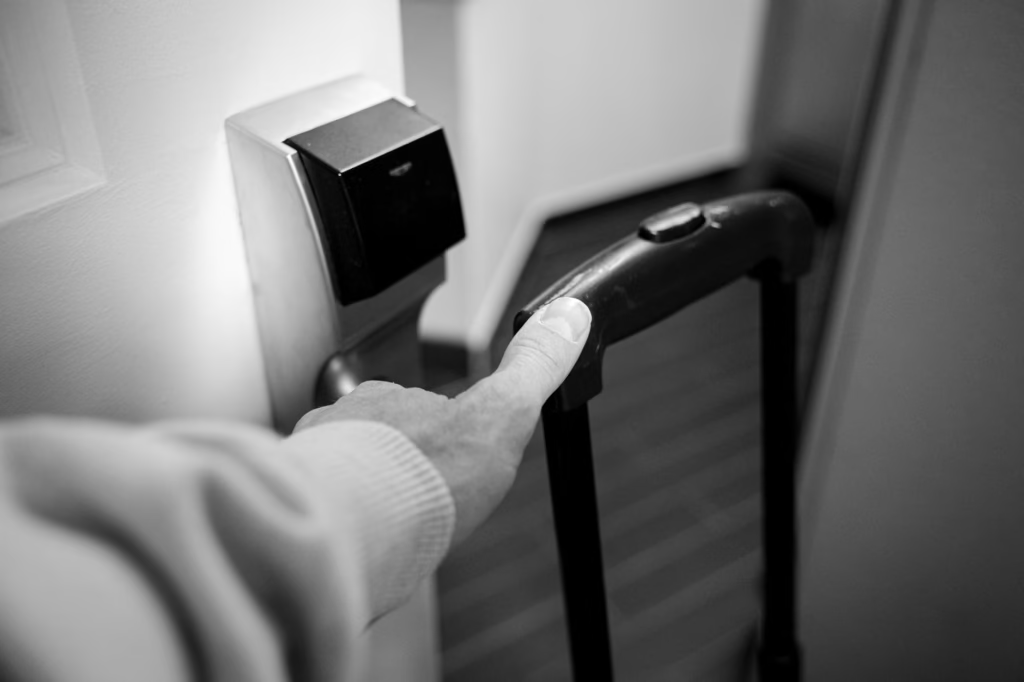
Cheap is not cheap if it leaves you isolated, confused, or dependent on sketchy transport at the end of every day. The State Department recommends booking accommodations before traveling, notes that travelers are often most at risk when they first arrive, and suggests places near transportation and important services with practical security features such as a 24-hour lobby, gates, or security staff. (travel.state.gov)
Do a five-minute room scan after check-in
- Check that the main door and windows lock properly, and make sure curtains close fully for privacy. (travel.state.gov)
- Find the nearest emergency exit route as soon as you enter the room, not when you are half asleep. (travel.state.gov)
- Carry the room key separately from anything showing the room number. (travel.state.gov)
- Meet visitors or new acquaintances in a public area, not in the room. (travel.state.gov)
- If the room, floor, or approach to the building feels wrong, change it immediately. A front-desk conversation is easier than a night spent ignoring your instincts.
| Situation | Usually safer starting choice | Why it often helps | Main watch-out |
|---|---|---|---|
| Arrival after dark in an unfamiliar city | Pre-booked licensed airport transfer or a traceable app-based ride | Reduces confusion, haggling, and pressure when tired | Verify the plate, driver, and pickup point before getting in |
| Short urban trip in a place with clear transit | Well-understood public transit or a licensed taxi/ride | Predictable and often efficient | Crowds can increase pickpocketing, and last-train timing matters |
| Late-night return to lodging | Licensed taxi or tracked ride instead of an isolated walk | Reduces time spent waiting alone or navigating in the dark | Do not let surge pricing push you into unmarked cars |
| Rural or remote day trip | Organized transfer or a known operator | Creates fewer failure points if signal or language becomes a problem | Weak coverage and long response times make backup plans more important |
| Walking in a new neighborhood after dark | Only if the route is direct, active, and familiar enough to repeat confidently | Sometimes the simplest option is fine | If the route depends on guesswork, detours, or an obviously low-traffic area, switch plans |
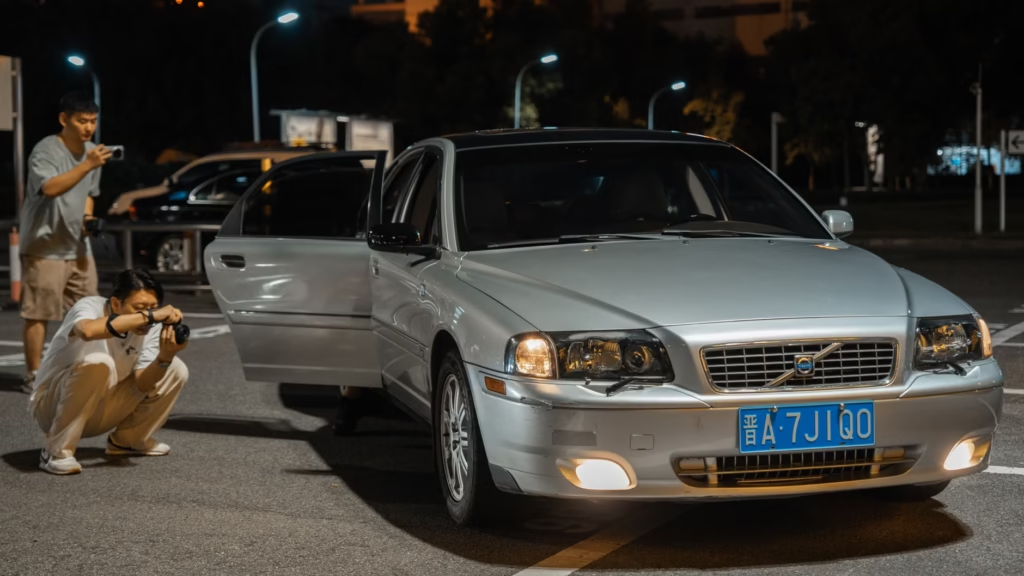
The point is not that one mode is always safest. In some cities, public transit is normal and efficient; in others, informal taxis or minibuses are a bad idea, especially alone. The State Department specifically advises using licensed, reputable transport, arranging airport transfers in advance, avoiding rides from strangers, and considering app-based services because they create a ride record. (travel.state.gov)
Manage visibility, alcohol, and routine like someone who expects friction
Being low-profile is not the same as being fearful. It means not volunteering unnecessary information, not looking obviously lost for long, and not making yourself the easiest target in a crowd. Practical State Department guidance includes not telling strangers where you are staying, keeping detailed travel plans off public channels until after you return home, and, from its women travelers guidance, even using only your first initial when registering at accommodations. (travel.state.gov)
Routine helps more than bravado. If you plan to drink, solve the ride home first. If you arrive jet-lagged, resist the urge to prove you can still squeeze in a late-night neighborhood walk. Fatigue, alcohol, and social pressure are what make people accept rides, routes, and invitations they would reject in daylight. The State Department’s drink-safety advice is blunt: watch your drink, do not accept drinks from strangers, and treat unusual symptoms as a reason to seek help quickly. (travel.state.gov)
- Carry your lodging address and a backup way to access it if your phone dies.
- Keep one payment method and a small emergency cash reserve separate from your main wallet or bag.
- Use location sharing or regular check-ins with one trusted person, especially on transit days or remote outings. (travel.state.gov)
- Download offline maps and keep device tracking turned on. (travel.state.gov)
- Set a turn-around time. If a plan keeps slipping later and later, simplify it before you are solving problems in the dark.
Health and digital problems can become physical safety problems
Solo travelers sometimes think of health prep as separate from personal safety. It isn’t. CDC advises checking destination-specific health information, making a pre-travel appointment four to six weeks before departure when possible, packing enough prescriptions for the whole trip plus extra, and building a travel health kit with items that may be hard to find at the destination. (wwwnc.cdc.gov)
Illness also changes judgment. CDC notes that contaminated food or drinks can cause travelers’ diarrhea and other diseases that disrupt travel, and it advises safer food and water habits where water quality is uncertain. CDC also notes that motor vehicle crashes are the leading cause of death among healthy travelers, which is one reason seat belts, sober drivers, and cautious road decisions matter so much. (wwwnc.cdc.gov)
Medication and insurance are easy to overlook. The State Department says some prescription and over-the-counter medicines that are legal in the United States may be illegal abroad, and U.S. health insurance may not cover care overseas. Review medication legality before departure and understand exactly whether your policy includes treatment, reimbursement, and medical evacuation. (travel.state.gov)
Digital safety matters for the same reason: a locked account, dead phone, or scam booking can strand you when you most need help. The State Department advises confirming your phone will work abroad, carrying backup contacts, and being cautious on Wi-Fi. FTC says most websites now use encryption and public Wi-Fi is usually safe for normal browsing, but strong passwords, two-factor authentication, updated devices, and caution around scam sites still matter. (travel.state.gov)
If a situation feels off, act earlier than feels socially comfortable
One of the most useful solo-travel skills is ending a situation before you have proof it is bad. The State Department’s guidance to women travelers says being safe is more important than being polite, and that principle applies widely. If a driver changes the pickup point, a host wants to move a conversation from the lobby to a private space, or a stranger becomes intrusive, an early exit is usually the better move. (travel.state.gov)
- Pause instead of negotiating with yourself. Name what feels wrong: the route, the person, the pressure, the crowd, the isolation, or the fact that the plan keeps changing.
- Move toward your refuge: a staffed lobby, cafe, hotel, shop, ticket office, or other public place with people around.
- Re-establish reachability. Text or call your contact, recharge if needed, and pull up the embassy, consulate, or local emergency numbers. Text and data may work even when calls do not. (travel.state.gov)
- Change the route, not your standards. Order a different ride, go back to your lodging, or take the more expensive but clearer option.
- If you think a crime or medical emergency is unfolding, contact local emergency services first. The State Department notes that U.S. citizens needing emergency medical or law-enforcement help abroad should contact local emergency services. (travel.state.gov)
A simple example makes this clearer. Imagine arriving at a station after dark with 12 percent battery, spotty signal, and several drivers calling out offers. A solo traveler using the Route-Refuge-Reachability check would not stand there trying to be efficient. The safer move is to step into a staffed area, contact the lodging, charge if possible, order only a licensed or traceable ride, and abandon any bargain that requires getting into an unmarked car. That is not overreacting. It is cutting off a chain of preventable problems. (travel.state.gov)
Common solo travel mistakes that look harmless
- Arriving without a first-night plan. The State Department warns that travelers are often most exposed on arrival. (travel.state.gov)
- Letting price choose the hotel location. A bargain outside the practical transport network creates repeated late-night safety decisions.
- Assuming reviews equal safety. Reviews tell you how people felt about the stay, not whether the walk from the station is a smart one at midnight.
- Keeping passport, cards, cash, and phone in the same bag or pocket. One theft should not end your ability to function.
- Posting your location in real time or telling casual strangers exactly where you are staying. Official crime guidance recommends keeping detailed travel plans off public channels until after you return home. (travel.state.gov)
- Believing confidence can replace logistics. Confidence does not charge a phone, find a licensed taxi, or create a backup route.
Advice changes with the traveler and the destination
Generic solo-travel advice has limits. Gender, age, disability, chronic illness, language ability, religion, race, sexuality, and local attitudes can all change what attracts attention, what kind of help is available, and what counts as normal behavior. The State Department maintains traveler-specific guidance alongside destination pages for exactly that reason. (travel.state.gov)
That is why local laws and customs are not throwaway reading. Clothing norms, medication rules, expectations around alcohol, photography, dating, or public behavior can all matter. Sometimes the smartest solo-safety move is blending in more. Other times it is paying for a more central hotel, avoiding a certain form of transport, or skipping a remote side trip unless you have stronger support on the ground. (travel.state.gov)
The safest solo trip is the one with easy exits
Traveling alone does not require constant fear, and it does not require pretending risk is imaginary. The useful middle ground is practical: research the destination honestly, reduce the number of improvisations, protect your health and communications, and treat early exits as skill rather than failure. Before the next trip, do three things first: check the advisory, lock in the first night, and build a clear Route-Refuge-Reachability plan for arrival day.
Is solo travel ever truly safe, or only relatively safe?
It is always relative. Risk depends on destination, timing, transport, health, behavior, and how much redundancy you build into the trip. The goal is not zero risk. It is lowering avoidable exposure and keeping good options available when something changes.
Should I avoid going out at night if I am alone?
Not automatically. A better question is whether you have a clear way there and back, whether the area stays active, and whether fatigue or alcohol will make the return riskier than the outing is worth. If the route back depends on uncertain transport, a long walk, or a dying phone, that is a strong signal to simplify the plan.
What should I do if I think I am being followed or pressured by a driver or stranger?
Move immediately to a staffed public place, contact local emergency services if you feel threatened, and do not prioritize politeness over distance. If you are abroad and need help, the nearest U.S. embassy or consulate can provide emergency assistance to U.S. citizens, but the State Department says local emergency services should handle immediate law-enforcement or medical emergencies. (travel.state.gov)
Is travel insurance worth it for a short solo trip?
Trip-cancellation coverage is a judgment call. Medical and evacuation coverage are the more serious questions, especially abroad, because the State Department says the U.S. government does not pay medical costs for U.S. citizens overseas and Medicare and Medicaid do not pay for medical care outside the United States. (travel.state.gov)
Do I need STEP for every international trip?
If you are a U.S. citizen traveling abroad, it is hard to argue against it. STEP is free, sends alerts from the local U.S. embassy or consulate, and can help officials contact you or your emergency contact in an emergency. (travel.state.gov)
What if I do not speak the local language?
That raises the importance of pre-booked arrivals, saved addresses, translation tools, and backup contacts. The State Department specifically recommends setting up communication tools before departure, confirming your phone will work, and keeping important contact information accessible in case you need another device. (travel.state.gov)
References
- U.S. Department of State: Travel Advisories – https://travel.state.gov/content/travel/en/traveladvisories/traveladvisories.html/?rc=1
- U.S. Department of State: Smart Traveler Enrollment Program (STEP) – https://travel.state.gov/content/travel/en/international-travel/before-you-go/step.html?sf6684224=1
- U.S. Department of State: International Travel Checklist – https://travel.state.gov/en/international-travel/planning/checklist.html
- U.S. Department of State: Driving and Transportation Safety Abroad – https://travel.state.gov/en/international-travel/planning/guidance/driving-transportation.html
- U.S. Department of State: Lodging Safety – https://travel.state.gov/en/international-travel/planning/guidance/lodging-safety.html
- U.S. Department of State: Laws Abroad – https://travel.state.gov/en/international-travel/planning/guidance/laws.html
- U.S. Department of State: Travel Insurance – https://travel.state.gov/en/international-travel/planning/guidance/insurance.html?os=f
- U.S. Department of State: Communicating While Abroad – https://travel.state.gov/en/international-travel/planning/guidance/communication-abroad.html
- U.S. Department of State: Women Travelers – https://travel.state.gov/en/international-travel/planning/personal-needs/women.html
- U.S. Department of State: Crime – https://travel.state.gov/en/international-travel/travel-advisories/crime.html?os=io
- CDC Travelers’ Health: Before You Travel – https://wwwnc.cdc.gov/travel/page/before-travel
- CDC Travelers’ Health: Survival Guide to Safe and Healthy Travel – https://wwwnc.cdc.gov/travel/page/survival-guide