
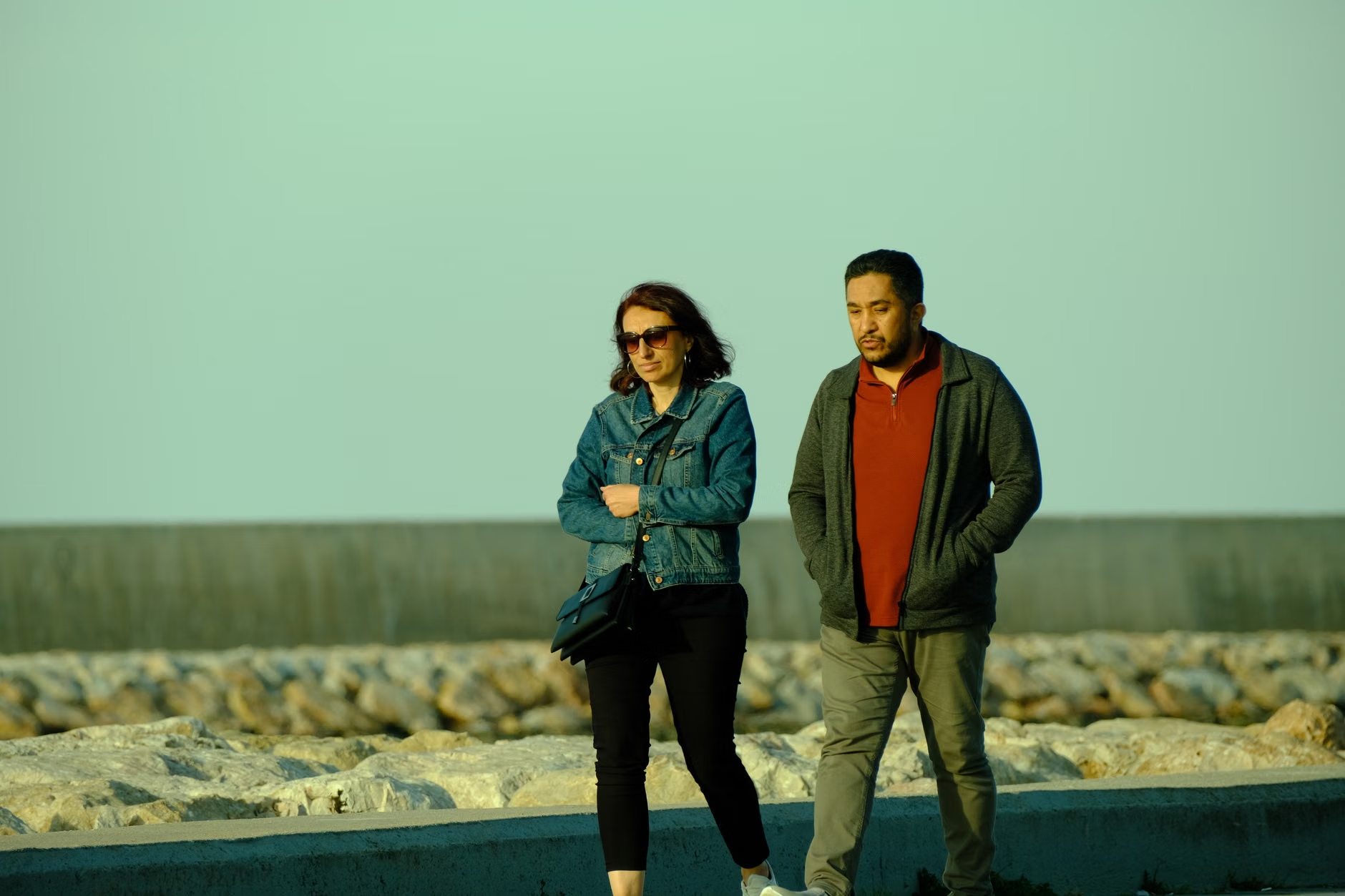
A good weekend getaway is less about finding one perfect destination and more about matching the trip to the people taking it. Couples usually want connection without logistics taking over. Families need easy transitions and room for kids to reset. Solo travelers often get the most value from simplicity, not a packed schedule. If the destination fights those needs, even a beautiful place can feel rushed.
Pick the trip by available time, not by ambition
For a two-night trip, travel time is the first filter. If getting there takes most of Friday night and half of Saturday, the destination has to deliver immediately, or the weekend starts to feel like commuting with better scenery. A useful rule is to choose one anchor experience, one backup plan, and one open block of time. That keeps the weekend from turning into a checklist.
- Start with door-to-door travel time, not miles. A nearby town with an easy train or highway route may beat a more dramatic place that takes two connections or a long drive.
- Choose one reason to go: a great meal, a beach, a trail system, a museum district, a cabin porch, or time by the water. If the trip needs six activities to feel worth it, it is probably too far or too expensive in energy.
- Ask what has to be reserved in advance. Weekend travel goes sideways when the key piece of the trip turns out to be sold out.
- Leave at least one half-day lightly planned. That buffer matters if the weather changes, kids get tired, or everyone simply wants to slow down.
A simple hypothetical example: a mountain town four hours away may sound better than a small city 90 minutes away, but after driving, parking, check-in, and meals, the closer option can produce more real vacation time. On a weekend, usable hours usually matter more than brag-worthy distance.
Couples usually do best with one memorable anchor and very little switching around
The strongest couple getaways are often built around mood, not volume. A walkable small city works well when the goal is good food, conversation, and a little browsing between stops. A lakeside inn, cabin, or coastal town fits better when the point is quiet, scenery, and an earlier bedtime. If both people want activity, a trail town or national park gateway can work, but only if the weekend is organized around one main outing rather than cramming in every viewpoint.
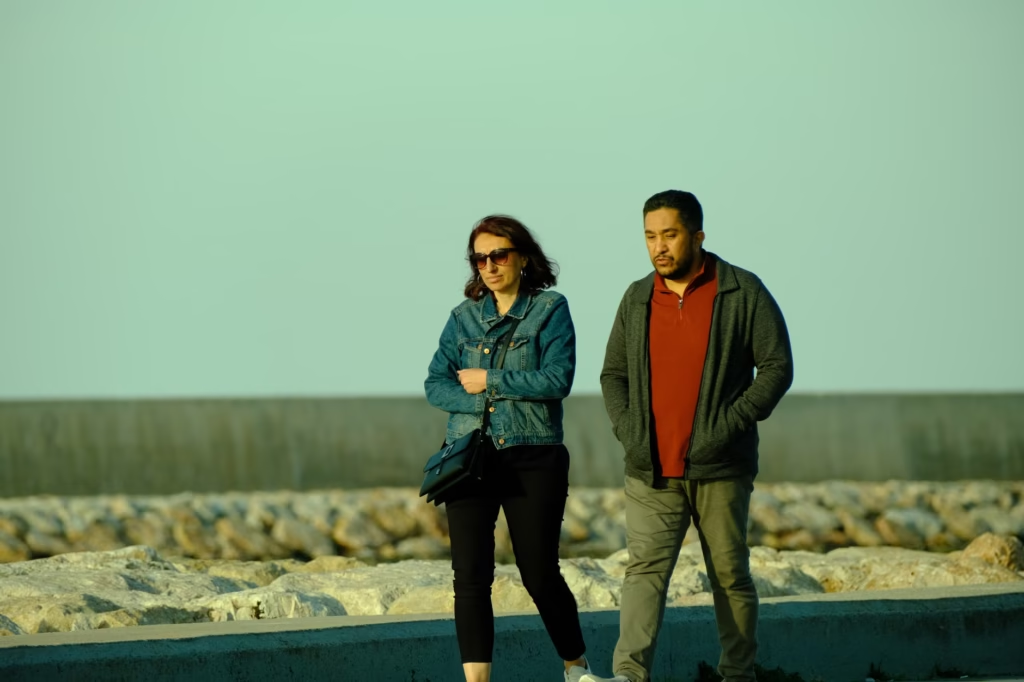
- Choose a walkable base if dinner and downtime are the priorities. Fewer car trips usually mean less friction and more time together.
- Pick a scenic stay if the lodging itself adds value. A room with a porch, fire pit, or water view can replace the need for a packed itinerary.
- Save the multi-stop road trip idea for a longer vacation. Constant repacking can make a romantic weekend feel strangely administrative.
One common mistake is assuming a couple trip needs a formally romantic destination. Often, the better choice is simply a place where decision fatigue drops. Good coffee, one nice dinner reservation, and an easy morning walk can be enough.
Family weekends work better when the destination has built-in flexibility
Families rarely need more attractions. They need fewer hard transitions. That usually means picking a place where meals are easy, bathrooms are close, and there is something to do if the weather turns. A hotel with a pool near one major attraction can outperform a more ambitious itinerary with long lines and long drives. So can a cabin rental near a lake, beach, or easy trail network, especially if lunch and downtime do not require leaving the site every few hours.
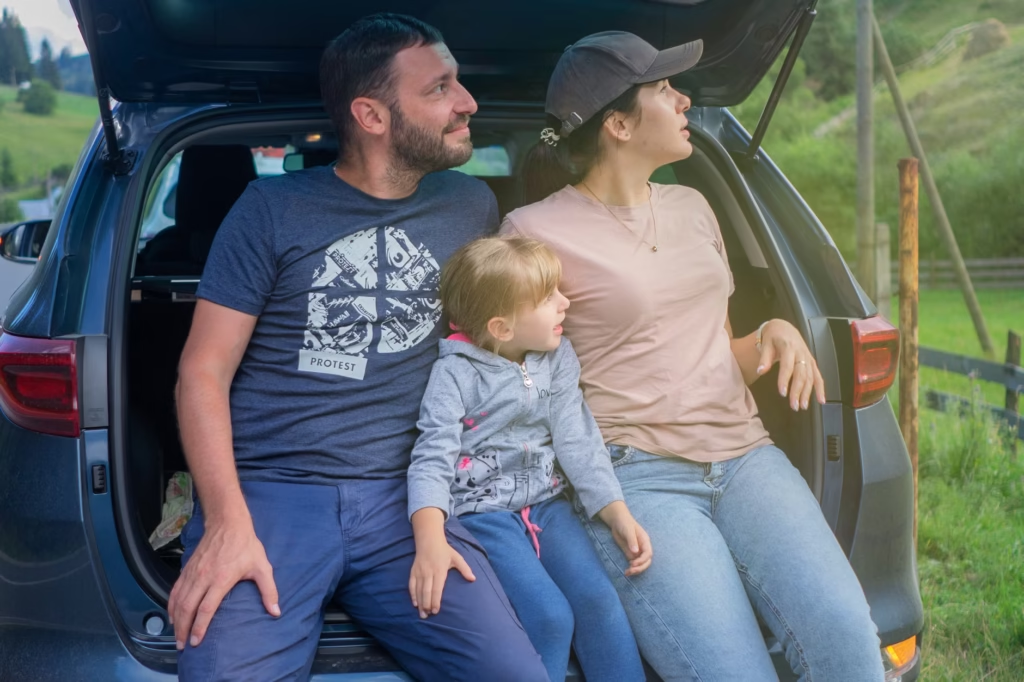
Outdoor weekends can be especially good for families when expectations are realistic. The National Park Service advises travelers to check each park’s plan-your-visit information for operating hours, fees, and possible reservations or timed-entry requirements before arriving, and it specifically points families to the Junior Ranger program as a kid-friendly activity (nps.gov).
- For younger kids, prioritize short travel days and lodging with simple evenings: a kitchenette, outdoor space, or an on-site pool.
- For elementary-age kids, look for one anchor outing plus one low-stakes extra, such as a playground, visitor center, beach, or easy nature walk.
- For teens, a weekend works better when they get some ownership over the plan, whether that is choosing the food stop, trail, bike route, or local activity.
The tradeoff is that the easiest family weekend may not be the most impressive one. That is fine. A trip that everyone actually enjoys is usually better than a bigger trip spent managing hunger, boredom, and timing.
Solo weekends are best when the schedule is light but intentional
Solo travel has one big advantage on a weekend: nobody else’s pace has to be managed. That makes it ideal for focused trips. A walkable neighborhood in a nearby city can work if the goal is bookstores, museums, coffee shops, and a few hours of wandering. A quiet retreat near hiking, cycling, or the water makes more sense if the point is decompression. Another strong option is a skills-based weekend built around one interest, such as photography, antiquing, birding, or a long trail ride.

- Stay in one base and let the neighborhood do some of the work. Solo weekends feel fuller when there is less transit within the destination.
- Give the trip a theme, but keep it loose. One interest creates shape without making the weekend feel like homework.
- If the setting is remote, plan the basics early: arrival time, food access, and how much flexibility you will really have once you get there.
A common misunderstanding is that solo weekends need to be transformational. They do not. Sometimes the best one is just 36 quiet hours somewhere that makes ordinary routines feel better.
Three checks to make before you book anything
- Check reservation rules for parks, campgrounds, and popular public recreation sites. The National Park Service says some parks may require fees, timed entry, or reservations, and Recreation.gov notes that individual facility rules can override its general sitewide policies (nps.gov).
- If the trip involves flying, confirm your ID now rather than at the airport. TSA says that as of May 7, 2025, state-issued licenses and IDs that are not REAL ID-compliant are no longer accepted at airport checkpoints unless the traveler has another acceptable form of identification (tsa.gov).
- Look at the official forecast the day before and again the morning of departure, especially for beach, mountain, and outdoor weekends. The National Weather Service provides local forecasts and advises travelers to get the latest official forecast information before weather-sensitive activities (weather.gov).
The best weekend getaway idea is usually the one with the least friction for the people going. Keep the radius honest, choose one clear reason for the trip, and let the destination support that purpose. A short weekend does not need more stimulation. It needs a better fit.
References
- U.S. National Park Service – Travel Tips – https://www.nps.gov/planyourvisit/travel-tips.htm
- Recreation.gov – Reservation Policies – https://www.recreation.gov/reservation-policies
- Transportation Security Administration – Acceptable Identification at the TSA Checkpoint – https://www.tsa.gov/travel/security-screening/identification?ftag=MSF0951a18
- National Weather Service – Get Your NWS Forecast – https://www.weather.gov/forecast