
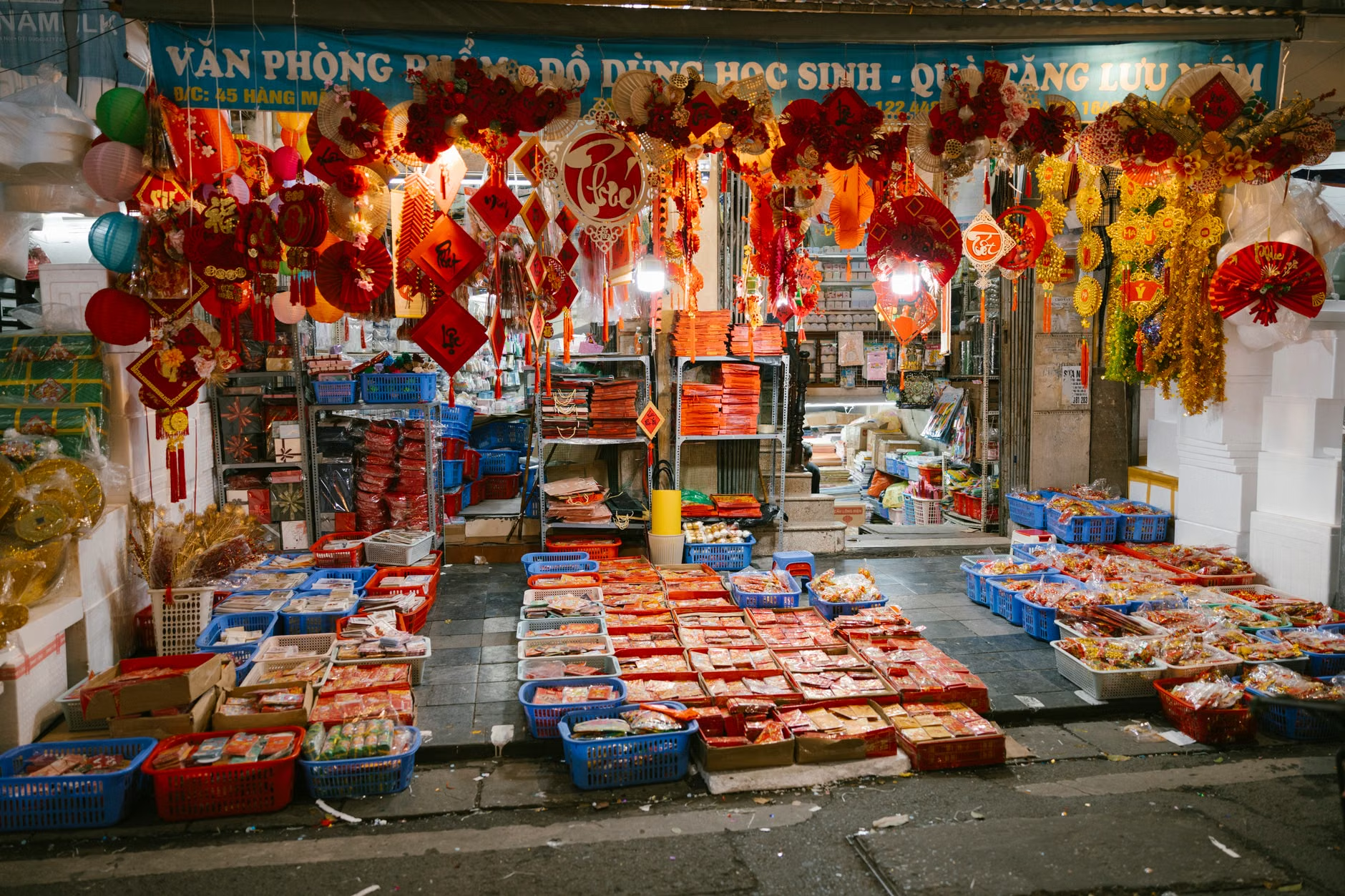
Budget travel in 2026 is not just a hunt for the lowest hotel rate. With international travel demand still strong, the smarter play is to choose destinations where airfare, food, local transportation, and day-to-day logistics all stay reasonable at the same time. That is why this list is not a strict cheapest-to-most-expensive ranking. It is a practical shortlist of 25 places where travelers can still build a satisfying trip without paying top-tier prices for every bed, meal, and transfer.
- For short trips from the U.S., closer destinations often beat farther “cheaper” ones once airfare and lost travel time are counted.
- For longer trips, Southeast Asia and the Balkans still offer some of the strongest day-to-day value.
- The best budget destination is the one that balances flight cost, local prices, and easy logistics.
- Use shoulder season whenever possible; peak summer and holiday dates can ruin the math.
- Before booking, verify current advisories, health guidance, and passport or visa rules.
What actually makes a destination budget-friendly this year
A destination earns a place here if it offers real value after arrival, enough budget infrastructure to travel independently, and a route structure that does not force constant splurges on private cars, expensive transfers, or packaged tours. A country can look cheap on paper and still produce an expensive trip if the useful airport is far from the places worth seeing, the most popular neighborhood has already become pricey, or weather and seasonality push everyone into the same few dates.
Use the full-trip budget test, not just a cheap-flight search
- Airfare reality: A low-cost destination is less useful if getting there requires awkward connections, checked-bag fees, or a forced overnight layover.
- Daily spend: Look at the cost of ordinary lodging, local food, public transit, and admissions in the neighborhoods that make sense for the trip you want.
- Friction costs: Visas, internal flights, ferries, guided excursions, seasonal surcharges, altitude adjustment days, and airport transfers can quietly change the budget.
A hypothetical example makes the point. For a 10- to 12-day trip, northern Thailand can still work out cheaper than a seemingly lower-fare European city because meals, guesthouses, and intercity transportation remain manageable once you arrive. For a four- or five-night escape from the U.S., though, Oaxaca or the Dominican Republic may be the better budget choice because the flight is shorter, the route is simpler, and fewer vacation days disappear into transit.
25 budget destinations worth shortlisting in 2026

| Destination | Best for | Why it works on a budget | Main tradeoff |
|---|---|---|---|
| Tirana and the Albanian Riviera, Albania | Beach trip with a city add-on | Affordable buses, guesthouses, and cafe culture compare well with much of the Mediterranean. | August coastal prices rise quickly, and transfers can take longer than expected. |
| Sofia and Plovdiv, Bulgaria | Compact European city breaks | Rail and bus links are useful, and everyday meals and apartments still feel reasonable. | Black Sea resort pricing is a different story from inland cities. |
| Bucharest and Brașov, Romania | City plus mountain itinerary | Intercity trains and broad lodging choice make a multi-stop trip easier to price. | Popular ski dates and holiday weekends push rates upward. |
| Sarajevo and Mostar, Bosnia and Herzegovina | History and food-focused travel | Small hotels, local dining, and bus travel usually go further than in Western Europe. | Transport is slower than many first-time visitors assume. |
| Kotor Bay and Cetinje, Montenegro | Scenic coast without Italian-level prices | A compact route can deliver strong value outside peak cruise-heavy weeks. | Summer crowding can make the coast feel more expensive than expected. |
| Ohrid and Skopje, North Macedonia | Lake and city combination | Walkable centers, inexpensive hotels, and low local transport costs help a week stretch. | Direct flight options may be limited depending on departure city. |
| Tbilisi and Kutaisi, Georgia | Food, architecture, and slow travel | Apartment rentals, casual dining, and shared transport can create strong overall value. | Mountain side trips add cost and time quickly. |
| Kraków and Wrocław, Poland | A first budget trip in Europe | Efficient trains and a deep lodging market make these cities easy to plan. | They are value destinations, not ultra-cheap ones. |
| Belgrade and Novi Sad, Serbia | Nightlife and architecture | Dining and local transit stay reasonable, and city breaks are easy to organize. | Nightlife spending can erase the savings fast. |
| Istanbul and the Aegean towns, Turkey | Big-city culture plus a coast add-on | Mass transit, ferries, and excellent everyday food help control daily costs. | Pricing can vary sharply by neighborhood and tourist density. |
| Cusco and Arequipa, Peru | Culture and dramatic scenery | Backpacker infrastructure and a wide range of lodging make independent travel workable. | Altitude, internal transfers, and regional disruptions require planning. |
| La Paz and Sucre, Bolivia | Deep value for longer trips | Once there, daily costs can be among the lowest on this list. | Altitude and road disruptions are meaningful comfort and budget risks. |
| Quito and Cuenca, Ecuador | Andean city hopping | Historic centers and bus networks support an independent, mid-cost trip shape. | Security varies significantly by area, so route choice matters. |
| Oaxaca City and Puebla, Mexico | Food-led short or mid-length trips | For U.S. travelers, shorter flights can beat farther destinations with lower daily costs. | State-level safety conditions matter more than countrywide averages. |
| Santo Domingo and Samaná, Dominican Republic | Warm-weather value from the U.S. | Often easier to reach cheaply than many more distant “cheap” destinations. | Resort zones, airport transfers, and all-inclusive habits can inflate the total. |
| Hanoi and Ninh Binh, Vietnam | Longer trips with strong value | Street food, trains, buses, and varied lodging create one of the best overall value equations. | Visa rules and holiday timing deserve attention before booking. |
| Siem Reap and Battambang, Cambodia | Temple trip with slower pacing | Guesthouses and easy bus travel keep a culture-heavy itinerary accessible. | Border-area cautions and petty theft mean the route should stay disciplined. |
| Luang Prabang and Vang Vieng, Laos | Scenic, slower travel | Budget guesthouses and relaxed pacing help keep day-to-day spending modest. | Off-route exploration is not wise in areas affected by unexploded ordnance. |
| Chiang Mai and Chiang Rai, Thailand | A first Southeast Asia trip | Low food and lodging costs pair with an easy visitor setup. | Seasonal smoke and border-area cautions can affect timing and routing. |
| Yogyakarta and East Java, Indonesia | Temples and volcano landscapes | Local rail, cheap food, and lower prices than more saturated resort areas create value. | Weather, ferries, and domestic transfers add friction. |
| Penang and Ipoh, Malaysia | Food-focused urban travel | Efficient transport and excellent casual dining help the budget hold together. | Island resort add-ons and upscale districts raise costs fast. |
| Kathmandu and Pokhara, Nepal | Low-cost mountain gateway | Budget stays and inexpensive local meals make longer itineraries realistic. | Trekking permits, guides, and weather windows change the math. |
| Jaipur and Udaipur, India | Architecture-heavy cultural trips | A broad range of hotel prices and dense sightseeing can reward careful planning. | Comfort level, train class, and transfers matter more than sticker price. |
| Galle and Ella, Sri Lanka | Scenic rail plus coast | Guesthouses and local trains can keep a classic route surprisingly manageable. | Monsoon timing and transport delays can force last-minute changes. |
| Fez and Chefchaouen, Morocco | Markets, architecture, and short stays | Riads, buses, and intercity rail can still deliver strong value. | Touts, guided add-ons, and transfer costs can quietly build up. |
Patterns matter more than rankings. If the trip is under a week, closer destinations usually win because airfare, jet lag, and transfer time stay under control. If the trip is 10 days or longer, places such as Vietnam, Thailand, Laos, Nepal, and parts of the Balkans often become more attractive because the fixed cost of reaching them is spread across many lower-cost days.
Which picks fit different kinds of travelers
- Best short-haul value from the U.S.: Oaxaca and Puebla, Santo Domingo and Samaná, and in some cases Peru if the routing is simple and the trip is at least a week.
- Best first-time budget international trips: Poland, Bulgaria, northern Thailand, Penang and Ipoh, and Vietnam because they combine visitor infrastructure with manageable costs.
- Best for food-first travelers: Oaxaca, Penang, Istanbul, Tbilisi, Hanoi, and Fez.
- Best for scenery without luxury-resort pricing: Ohrid, Montenegro in shoulder season, Sri Lanka’s rail-and-coast route, Nepal, and parts of Peru.
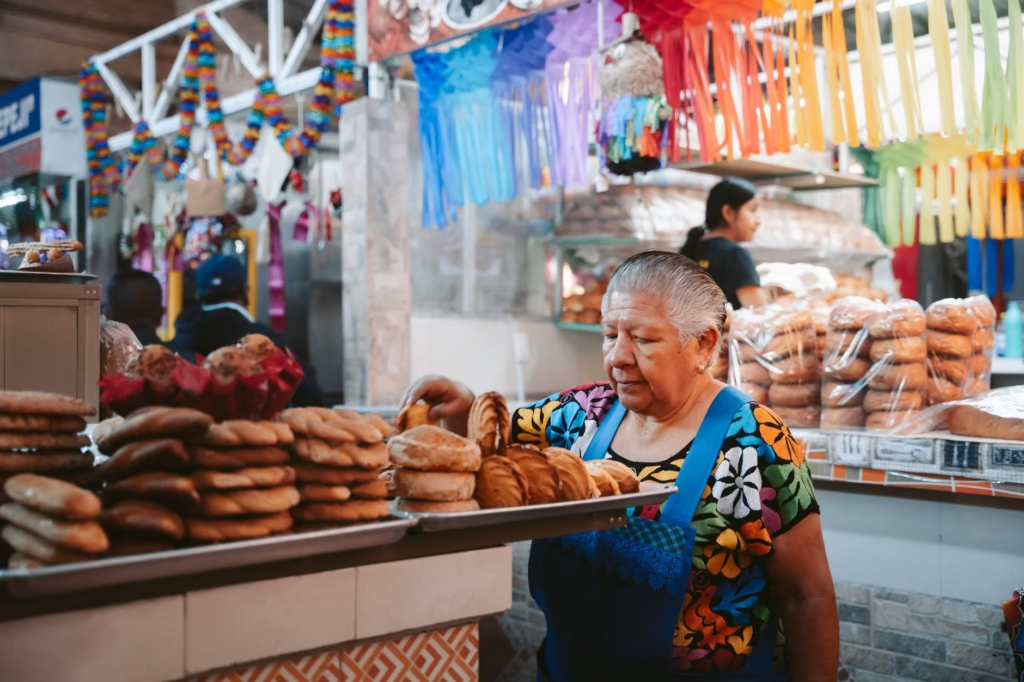
Travelers who dislike uncertainty should lean toward destinations where trains or buses are straightforward, hotel supply is broad, and route planning is easy. Travelers chasing the lowest day-to-day costs need to accept more friction, whether that means slower transport in the Balkans, altitude in Bolivia and Nepal, or more weather sensitivity in Indonesia and Sri Lanka.
How to turn a cheap destination into an actually cheap trip
- Start with trip length and total budget. A destination that works for 12 nights may be a poor value for five.
- Check flight pricing before falling in love with a place. Compare at least two regions and more than one departure date.
- Price the real route, not just the headline city. Add airport transfers, intercity transport, luggage fees, and the neighborhood where you would realistically stay.
- Use shoulder season when the destination still functions well. The goal is lower pressure and better rates, not rainouts, closures, or unsafe road conditions.
- Review travel advisories, health notices, passport validity rules, e-visa requirements, and insurance options before buying nonrefundable tickets.
- Keep a cash and time buffer. Budget trips fall apart when a delayed train, weather shift, or changed route leaves no room to adapt.
Mistakes that erase the savings
- Choosing only by airfare and ignoring local costs once on the ground.
- Assuming the capital city or most famous beach represents the whole country’s value.
- Packing too many stops into one trip because each bus or flight looks cheap by itself.
- Forgetting the hidden line items: baggage, airport transfers, ATM fees, visas, ferries, and park or site admissions.
- Ignoring climate, altitude, smoke season, or crowd patterns that can force more expensive last-minute decisions.
- Treating “budget” as a synonym for “effortless.” Some of the best-value places still demand careful routing and street awareness.
Before booking, check the current U.S. State Department destination page, CDC destination guidance and health notices, and IATA or Timatic entry rules. A bargain fare can become a bad trip if an area has active unrest, border warnings, vaccination needs, or document surprises.
The practical takeaway
The best budget travel destination in 2026 depends less on a viral list and more on the shape of the trip. For quick escapes, nearer destinations with simpler logistics often deliver better value than a much cheaper country on the other side of the world. For longer journeys, Southeast Asia, the Balkans, and selected Andean and North African cities still offer excellent value if the route is planned carefully. Use this list as a shortlist, then run each option through airfare, daily costs, and friction costs before committing.

What are the best budget destinations for a one-week trip from the U.S.?
For many U.S. travelers, Mexico, the Dominican Republic, and parts of Peru make the most sense because shorter flights and simpler routing protect both time and money. In Europe, Poland, Bulgaria, and Romania can work well if airfare from the departure airport is reasonable.
Are Level 2 travel advisories an automatic dealbreaker?
Not necessarily. Level 2 means exercise increased caution, not do not travel. The important part is the detail inside the advisory, including specific neighborhoods, road routes, border areas, or crime patterns that might affect the exact itinerary.
How can travelers tell whether a destination is only cheap on paper?
Price the whole route. If the trip requires frequent taxis, private transfers, domestic flights, guided day tours, or staying in a single overhyped district, the destination may no longer function as a true budget choice even if the room rate looked good at first.
Is Southeast Asia still worth it when long-haul airfare is expensive?
Usually for longer trips, yes. A more expensive flight becomes easier to absorb across 10 or more days of lower food, transport, and lodging costs. For a short trip, that same airfare can wipe out the advantage.
What should travelers verify right before booking?
Check passport validity rules, visa or e-visa requirements, current travel advisories, CDC health guidance, weather patterns, and whether the exact places on the route have seasonal closures, border cautions, or transport disruptions.
References
- OECD Tourism Trends and Policies 2026 – https://www.oecd.org/content/dam/oecd/en/publications/reports/2026/06/oecd-tourism-trends-and-policies-2026_13326fe2/3fd3cd75-en.pdf
- U.S. Department of State – Planning Your Travel – https://travel.state.gov/en/international-travel/planning.html/en-en/
- U.S. Department of State – Travel Advisories – https://travel.state.gov/en/international-travel/travel-advisories.html?os=app
- CDC Travelers’ Health – Destinations – https://wwwnc.cdc.gov/travel/destinations/list/
- CDC Travelers’ Health – Travel Health Notices – https://wwwnc.cdc.gov/travel/notices/
- CDC Travelers’ Health – Survival Guide to Safe and Healthy Travel – https://wwwnc.cdc.gov/travel/page/survival-guide
- IATA Travel Centre / Timatic – Passport, Visa and Health Requirements – https://www.iata.org/en/services/compliance/timatic/travel-documentation/
- Mexico Travel Advisory – https://travel.state.gov/en/international-travel/travel-advisories/mexico.html?subContentTypes=Country+Security+Report
- Peru Travel Advisory – https://travel.state.gov/content/travel/en/traveladvisories/traveladvisories/peru-travel-advisory.html
- Thailand Travel Advisory – https://travel.state.gov/content/travel/en/traveladvisories/traveladvisories/thailand-travel-advisory.html?mod=article_inline
- Cambodia Travel Advisory – https://travel.state.gov/en/international-travel/travel-advisories/cambodia.html?eaid=66520