
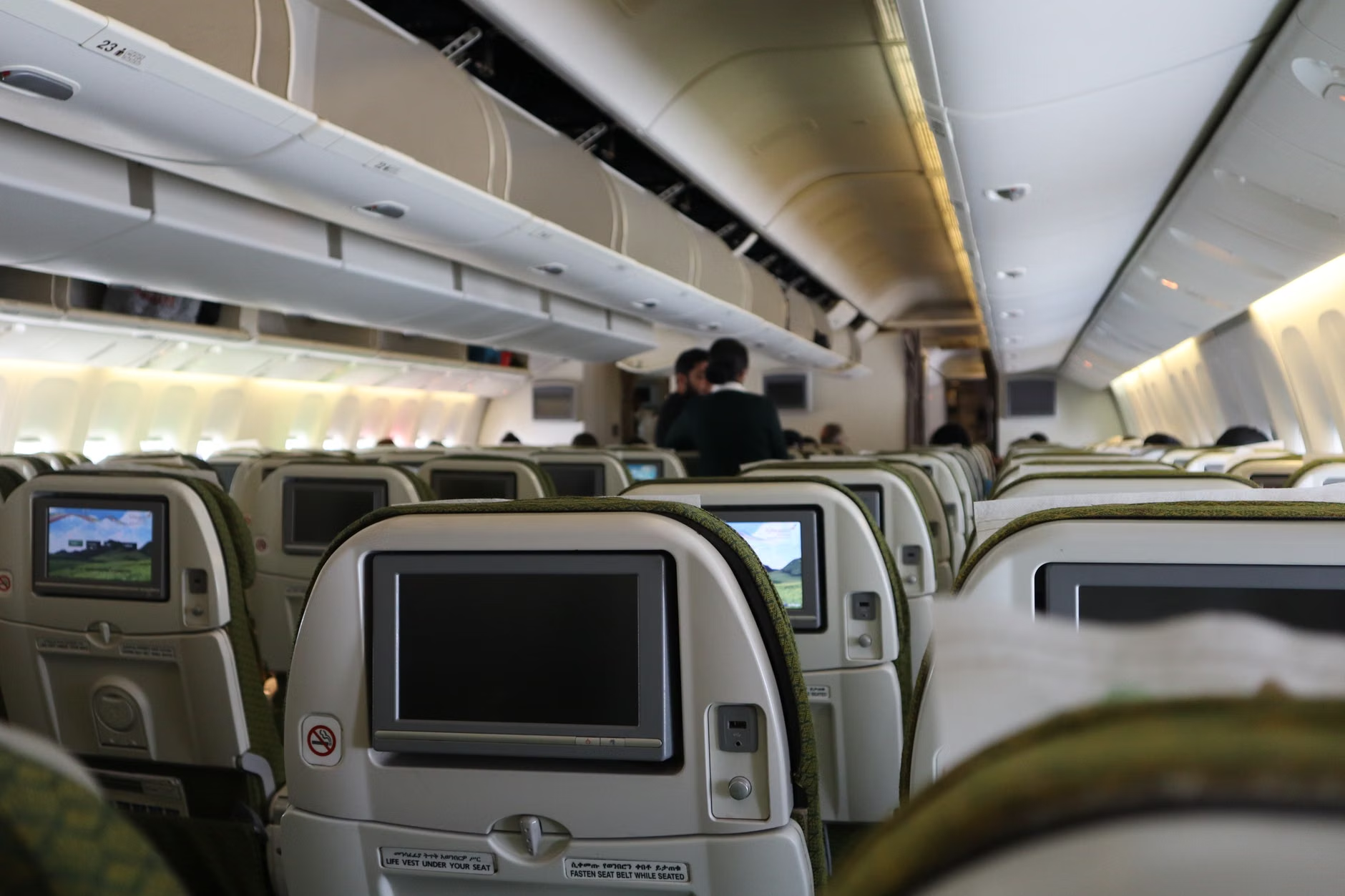
A bad long-haul flight is usually not one dramatic problem. It is a stack of smaller ones: dry cabin air, limited movement, awkward sleep, pressure changes in the ears, and an arrival time that fights the body clock. Commercial aircraft cabins are typically pressurized to the equivalent of roughly 6,000 to 8,000 feet above sea level, and cabin humidity is usually only 10% to 20%, which helps explain why eyes, nose, throat, legs, and sleep can all feel worse by landing. (cdc.gov)
Table of Contents
- TL;DR
- Why long-haul flights wear people down in predictable ways
- Choose the least punishing itinerary before you ever pack
- Pack a small cabin kit that solves the actual problems
- Once airborne, protect circulation before discomfort compounds
- Sleep, hydration, and meals work best when they are coordinated
- Beat jet lag by managing light and bedtime after landing
- Five mistakes that make long flights feel longer
- When to get medical or airline-specific advice before departure
- A simple 24-hour preflight checklist
- A better arrival starts before takeoff
- FAQ
- References
TL;DR
- Choose the seat for your real problem: aisle for movement, window for sleep, and over-the-wing seating if motion tends to bother you. (cdc.gov)
- Treat hydration as comfort maintenance, not a miracle cure. Dry cabins cause real irritation, but water alone is not proven protection against travel-related blood clots. (cdc.gov)
- Move earlier and more often than feels necessary. CDC guidance supports frequent ambulation and calf exercises on long flights. (cdc.gov)
- Keep your seat belt fastened whenever you are seated, even in smooth air, because turbulence can occur unexpectedly. (faa.gov)
- Jet lag gets easier when light exposure, naps, and bedtime are planned around the destination, not around how tired you feel in the moment. (cdc.gov)
- If you have clot risk factors, recent surgery, significant heart or lung disease, or oxygen needs, get personalized advice before the trip. (cdc.gov)
Why long-haul flights wear people down in predictable ways
Most healthy travelers tolerate flying safely, but the environment is still uncomfortable in specific, repeatable ways. CDC guidance notes that dry cabin air can irritate the eyes and upper airway, barometric pressure changes can trigger ear or sinus pain, and long stretches of sitting can contribute to leg swelling and raise concern about venous thromboembolism, the umbrella term for deep vein thrombosis and pulmonary embolism. Rapid travel across time zones adds a second layer of strain by disrupting circadian timing, which is why a traveler can land exhausted but still be unable to sleep at the right local hour. (cdc.gov)
A useful way to plan is the four-phase comfort plan: choose the least punishing itinerary, pack a cabin kit instead of a vague travel bag, manage circulation and sleep while airborne, and reset quickly after landing. It is not a formal medical system. It is a practical order of operations for solving the right problem at the right time.
Choose the least punishing itinerary before you ever pack
Start by deciding what usually ruins a flight. If the real issue is stiffness, swelling, or reluctance to climb past seatmates, an aisle seat can matter more than any gadget. CDC notes that aisle seating may help reduce clot risk because it makes movement easier, while window seating can discourage getting up. If sleep is the higher priority, though, a window still offers clear advantages: a surface to lean against and fewer interruptions from neighbors. Flight timing matters too. CDC recommends choosing itineraries that support the light exposure you will want at the destination, because daylight timing is one of the strongest tools for reducing jet lag. (cdc.gov)
| If your priority is | Best seat choice | Why it helps | Main tradeoff |
|---|---|---|---|
| Sleeping without being bumped | Window | Gives head support and one less person climbing past you | Harder to get up, so movement often drops |
| Walking often and protecting circulation | Aisle | Makes it easier to stand, stretch, and use the restroom without negotiation | More bumps from carts, crew, and passing passengers |
| Extra legroom | Exit row or bulkhead when available | Can reduce knee compression and make posture less cramped | Often costs more and may come with storage or armrest tradeoffs |
| Reducing motion discomfort | Over-the-wing seat, often with a window | Usually feels steadier to motion-sensitive travelers | Not ideal if frequent walking matters more |
| Fast deplaning or a tight connection | Farther forward in your cabin | Cuts down the standing wait after landing | May do little for sleep or legroom |
A nonstop is not automatically more comfortable than a one-stop itinerary. A connection breaks up a very long sitting period, but it also adds a second boarding process, more delay risk, and more chances to lose sleep. For motion-sensitive travelers, the Aerospace Medical Association suggests seats over the wing and, when practical, a window seat. If you know you need to stand regularly, that recommendation is secondary to having easy aisle access. (asma.org)
Pack a small cabin kit that solves the actual problems
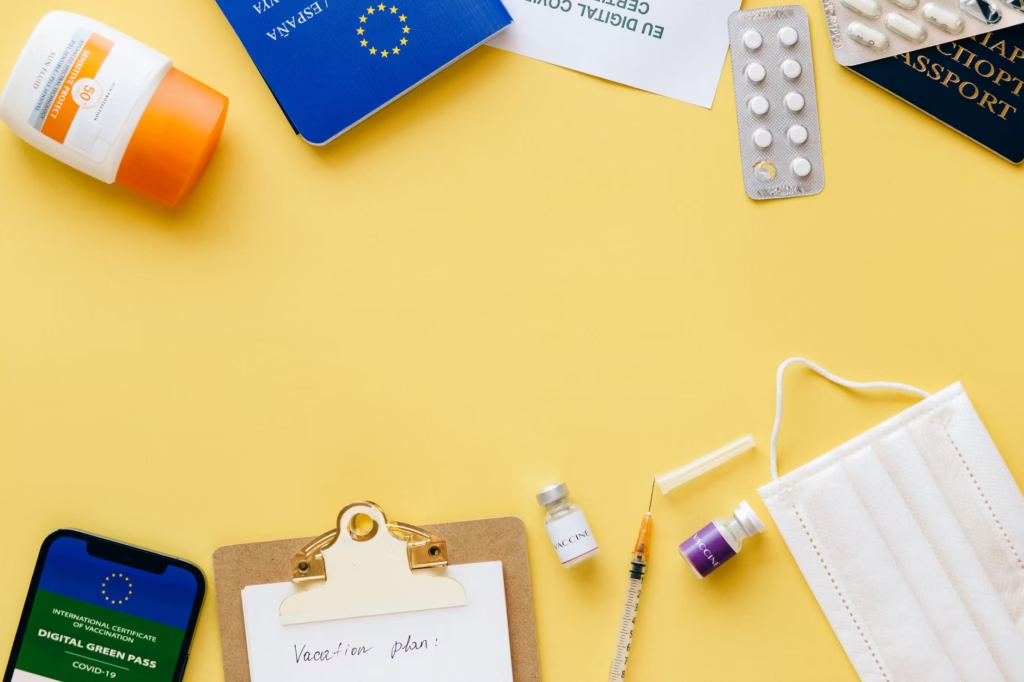
- A refillable water bottle to fill after security. Cabin air is dry enough to irritate the eyes and airway, so access to water matters for comfort even though hydration is not proven clot prevention. (cdc.gov)
- Eye drops, lip balm, and, if dry eyes are common, glasses instead of contact lenses. That advice lines up with Aerospace Medical Association guidance for low-humidity cabin conditions. (asma.org)
- An eye mask and earplugs or noise-canceling headphones. They are often more useful than a larger pillow because they let you control light and stimulation when sleep is fragmented.
- All medications in your carry-on, plus extra doses for delays. CDC notes that changing time zones can disrupt medication timing, and it recommends carrying enough medication for the trip plus extra in case checked luggage is delayed or lost. TSA allows medications in carry-on baggage. (cdc.gov)
- A power bank and charging cable. In the U.S., TSA says spare lithium batteries and power banks must be carried in carry-on baggage only, not checked luggage. (tsa.gov)
- One light layer and comfortable socks. Cabin temperature varies, and a thin extra layer often does more for comfort than a bulky travel outfit.
- Compression socks if you are at increased clot risk or regularly get ankle swelling, but not as an automatic purchase for every healthy traveler. CDC guidance reserves graduated compression stockings mainly for travelers at increased risk. (cdc.gov)
Once airborne, protect circulation before discomfort compounds
After takeoff, movement matters more than people think because immobility accumulates quietly. AsMA recommends keeping the area under the seat in front of you clear when possible to preserve leg space, and CDC says frequent ambulation and calf muscle exercises are reasonable on long-distance trips. In practice, the easiest system is behavioral rather than athletic: flex your ankles during movies, stand when a seatmate wakes up, and walk the aisle when traffic clears instead of waiting until your legs already feel heavy. (asma.org)
Keep your seat belt fastened whenever you are seated, even if the flight looks calm and the seat belt sign is off. The FAA warns that turbulence can occur unexpectedly, including in clear-looking conditions, and passengers who are not belted can be thrown from their seats without warning. That is a safety habit first, but it also prevents the annoying pattern of having to fully wake up and rebuckle every time the air gets choppy. (faa.gov)
Compression socks are not a universal rule. CDC points to below-the-knee graduated compression stockings mainly for travelers at increased venous thromboembolism risk, not for every healthy passenger on every long flight. That distinction matters because travelers often buy socks as a catch-all solution when the bigger issue is simple inactivity. If risk factors are present, stockings may be worthwhile. If they are not, regular movement is the more important baseline habit. (cdc.gov)
Seek urgent medical care after travel for one-sided leg pain or swelling, or for unexplained shortness of breath, chest pain, coughing blood, or fainting. CDC notes these can be signs of deep vein thrombosis or pulmonary embolism. (cdc.gov)
Sleep, hydration, and meals work best when they are coordinated
Hydration helps comfort, but it is not magic. CDC notes there is no direct evidence that frequent hydration prevents travel-related blood clots, yet dry cabin air is common enough to make water genuinely useful for comfort, especially if your eyes, nose, or throat tend to dry out. AsMA advises limiting alcohol and caffeinated drinks because they can increase fluid loss, and CDC separately advises travelers to limit or refrain from in-flight alcohol and to be cautious with hypnotic sleep drugs. A practical rule is to drink steadily, eat lighter than you would on the ground, and stop expecting alcohol to function as a sleep strategy. (cdc.gov)
Ear and sinus discomfort are easier to prevent than to fix once descent starts. CDC says barotrauma most often affects the middle ear when pressure cannot equalize, especially with congestion. Swallowing, chewing, or yawning during descent can help; AsMA gives the same advice and notes that travelers with a significant ear, nose, or sinus infection may be better off postponing if possible rather than gambling on a painful descent. If dry eyes are a recurring issue, AsMA also suggests glasses over contact lenses and the use of eye drops. (cdc.gov)
Beat jet lag by managing light and bedtime after landing
Jet lag is not just tiredness. CDC describes it as a circadian disruption caused by rapid travel across time zones, often bringing poor sleep, daytime sleepiness, slowed thinking, malaise, and even gastrointestinal symptoms. Eastbound trips are usually harder than westbound ones because advancing the body clock is tougher than delaying it; CDC estimates average adaptation at about 1 hour per day eastbound and 1.5 hours per day westbound. If possible, start nudging bedtime toward the destination by about an hour per day for the two or three days before departure. (cdc.gov)
The most effective tool after landing is light. CDC says morning bright light tends to shift the body clock earlier, while evening light tends to shift it later, so the right exposure depends on direction of travel and the number of time zones crossed. That is why arrival-day strategy matters more than squeezing out one more hour of broken sleep on the plane. After an eastbound overnight flight, daylight and a short outdoor walk usually do more for adjustment than hiding in a dark hotel room at noon. If a nap is necessary, CDC recommends keeping it short, around 20 to 30 minutes, because longer daytime naps can interfere with nighttime sleep. (cdc.gov)

Melatonin can help some travelers, but only when timing is right. CDC says relatively low doses, often 0.5 to 1 mg, may be enough to shift circadian timing, and it advises against high doses above 5 mg for jet lag because excess melatonin can spill into the wrong part of the day as it is metabolized. CDC also notes that melatonin supplements are not regulated by the FDA for consistency, so label accuracy can vary. If regular medications or health conditions are part of the picture, clinician guidance is worth getting before using it as a travel tool. (cdc.gov)
Example: imagine an overnight flight from New York to London with a morning arrival. If sleeping upright is usually hard, trying to force eight perfect hours may backfire. A better plan may be to eat lightly, keep alcohol low, use an eye mask for whatever sleep comes naturally, get daylight soon after landing, and use only a short early-afternoon nap if absolutely needed. That fits CDC guidance on timed light exposure and short naps better than sleeping half the afternoon after arrival and then wondering why local bedtime feels impossible. (cdc.gov)
Five mistakes that make long flights feel longer
- Buying the window seat by default when your real problem is not sleeping but failing to get up. CDC points out that aisle access supports ambulation, which is one reason it can matter for long-flight comfort. (cdc.gov)
- Checking the items you will need most. TSA says power banks and spare lithium batteries belong in carry-on baggage, and CDC recommends carrying necessary medications plus extra doses with you. (tsa.gov)
- Using alcohol as a substitute for an actual rest plan. It can worsen fluid loss and leave you groggy, and CDC advises caution with in-flight hypnotic drugs as well. (asma.org)
- Saving all movement for one big stretch. CDC guidance favors frequent ambulation and calf exercises, not a single heroic walk after eight hours of stillness. (cdc.gov)
- Taking a marathon nap after landing. CDC says short naps can help, but longer daytime naps can interfere with the night sleep you are trying to restore. (cdc.gov)
When to get medical or airline-specific advice before departure
Some travelers should not rely on generic comfort advice alone. CDC lists recent surgery or trauma, active cancer, pregnancy or the postpartum period, prior venous thromboembolism, estrogen use, obesity, older age, limited mobility, certain clotting disorders, and family history as meaningful risk factors for travel-associated clots. For higher-risk travelers, compression stockings or medication decisions should be individualized with a clinician rather than improvised at the airport. (cdc.gov)
Preexisting heart, lung, blood, or cerebrovascular conditions can also change the equation. CDC notes that cabin pressure and reduced oxygen can exacerbate underlying problems in some travelers, and passengers who need supplemental oxygen must coordinate with the airline in advance; CDC says notification should happen at least 72 hours before departure. Changing time zones can also interfere with medication schedules, so travelers who take drugs at fixed intervals should ask a clinician for a flight-day dosing plan and keep the medication in carry-on baggage, not checked luggage. (cdc.gov)
A simple 24-hour preflight checklist
- Recheck your seat choice against your real priority: sleep, movement, legroom, motion control, or fast deplaning.
- Pack medications, chargers, and your power bank in carry-on baggage. TSA says spare lithium batteries and power banks belong there, and CDC recommends extra medication for delays. (tsa.gov)
- If crossing time zones, decide before boarding whether the flight is mainly for sleeping, staying awake, or simply resting quietly. Do not improvise with alcohol or unfamiliar sleep drugs. (cdc.gov)
- Once seated, clear as much leg space as possible and plan regular calf movement and short walks from the start. (asma.org)
- Keep the seat belt fastened whenever seated, including when you are trying to sleep. (faa.gov)
- After landing, use daylight and only a short nap if necessary instead of a long afternoon crash. (cdc.gov)
A better arrival starts before takeoff
Long-haul comfort is rarely about one miracle product. It is the cumulative effect of better early decisions: the right seat for the problem, a carry-on built for the cabin, movement before stiffness sets in, and a post-landing plan that respects the destination clock. A long flight may never feel luxurious, but it can feel controlled, and that is usually what travelers actually want.
FAQ
Is an aisle seat always better for a long-haul flight?
No. It is often better if movement, circulation, or restroom access is the main issue, and CDC notes that aisle access may help because it makes ambulation easier. But if the real goal is sleeping without interruptions, a window seat is often more practical. (cdc.gov)
Do healthy travelers need compression socks?
Not necessarily. CDC guidance reserves graduated compression stockings mainly for travelers at increased clot risk. For lower-risk passengers, the bigger priority is moving regularly and avoiding long periods of total stillness. (cdc.gov)
Should I try to sleep on every overnight flight?
Only if that sleep supports the destination schedule. CDC frames jet lag as a timing problem, so sometimes quiet rest and a strong arrival-day light plan are more useful than chasing perfect sleep in a cramped seat. Short naps can help; long arrival-day naps often do not. (cdc.gov)
Are sleeping pills a good idea on long flights?
They can help some travelers, but CDC advises caution with hypnotic drugs in flight, especially if the expected sleep period is shorter than the drug’s effects. If medication timing or a health condition is involved, get personal medical advice before the trip. (cdc.gov)
How worried should I be about a blood clot after a long flight?
For travelers without major risk factors, the overall risk is low, but it rises with long duration and with preexisting risk factors. Seek urgent care for one-sided leg swelling or pain, or for unexplained shortness of breath, chest pain, coughing blood, or fainting after travel. (cdc.gov)
References
- CDC Yellow Book: Air Travel – https://www.cdc.gov/yellow-book/hcp/travel-air-sea/air-travel.html
- CDC Yellow Book: Deep Vein Thrombosis and Pulmonary Embolism – https://www.cdc.gov/yellow-book/hcp/travel-air-sea/deep-vein-thrombosis-and-pulmonary-embolism.html
- CDC Yellow Book: Jet Lag Disorder – https://www.cdc.gov/yellow-book/hcp/travel-air-sea/jet-lag-disorder.html
- CDC Yellow Book: The International Business Traveler – https://www.cdc.gov/yellow-book/hcp/travel-for-work-other/international-business-traveler.html
- Federal Aviation Administration: Turbulence, Staying Safe – https://www.faa.gov/travelers/fly_safe/turbulence
- Transportation Security Administration: Complete List of What Can I Bring – https://www.tsa.gov/travel/security-screening/whatcanibring/all-list?pubDate=20250608
- Transportation Security Administration: TSA Travel Tips – https://www.tsa.gov/news/press/factsheets/tsa-travel-tips
- Aerospace Medical Association: Health Tips for Airline Travel – https://asma.org/wp-content/uploads/2025/08/HEALTH-TIPS-FOR-AIRLINE-TRAVEL-Trifold-2013.pdf